

Dental bonding is a popular cosmetic procedure that improves the appearance of teeth by repairing chips, cracks, or discoloration.
If you’re considering dental bonding, understanding the cost is essential.
In this comprehensive guide, we’ll break down how much dental bonding costs, what factors influence the price, and how to make the most of your investment.
What is Dental Bonding?
Dental bonding involves applying a tooth-colored resin material to the surface of a tooth. It is then hardened with a special light, bonding it to the tooth to improve its shape, size, or appearance. Dental bonding is often used to:

How Much Does Dental Bonding Cost?
On average, dental bonding costs between $200 and $600 per tooth in Canada and the U.S. However, the price can vary based on several factors. The good news is that dental bonding is typically less expensive than other cosmetic procedures like veneers or crowns, making it an affordable option for many patients.
Cost Breakdown by Region
The cost of dental bonding can also vary by location. Here’s a breakdown of average costs in different regions:

Factors That Affect Dental Bonding Costs
Several factors influence how much you’ll pay for dental bonding, including:
1. Extent of the Procedure
The price depends on the complexity of the bonding work. Minor cosmetic repairs, like fixing a small chip, will cost less than extensive reshaping or filling larger gaps between teeth.
2. Number of Teeth
If you’re bonding multiple teeth, the total cost will increase. Dentists typically charge per tooth, so the more teeth that require bonding, the higher the final bill.
3. Location of the Dentist
Dental procedures can vary in price based on geographic location. Dentists in urban areas or regions with a high cost of living may charge more than those in rural areas.
4. Dentist’s Experience
Highly experienced or specialized cosmetic dentists may charge more for their services, though you may receive more precise and aesthetically pleasing results.
5. Materials Used
While composite resin is a standard material for dental bonding, the quality or type of resin can affect the price. Some high-end dental practices use premium materials that are more durable and stain-resistant.
6. Dental Insurance
In some cases, dental bonding may be covered by insurance if it’s deemed medically necessary. For example, bonding used to repair a decayed tooth or prevent further damage could be eligible for partial coverage. Cosmetic bonding, however, is typically not covered by insurance.
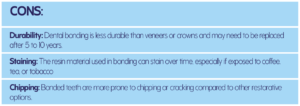
Pros and Cons of Dental Bonding

How to Make Dental Bonding Last Longer
With proper care, dental bonding can last 5 to 10 years or even longer. Here are some tips to prolong the lifespan of your bonded teeth:
1. Practice Good Oral Hygiene
Regular brushing and flossing are essential to prevent decay and protect the bonded areas. Be gentle when brushing bonded teeth to avoid damaging the resin.
2. Avoid Staining Foods and Drinks
Composite resin used in bonding is prone to staining. Try to limit your intake of coffee, tea, red wine, and tobacco to keep your bonded teeth looking bright.
3. Use a Mouthguard if You Grind Your Teeth
If you grind your teeth at night, consider using a mouthguard to protect your bonded teeth from damage.
4. Regular Dental Checkups
Visit your dentist regularly for cleanings and checkups. They can polish the bonded teeth to maintain their appearance and ensure that the bonding is intact.
Alternatives to Dental Bonding
If you’re considering dental bonding, you might also want to explore other cosmetic dental options, each with different price points and longevity:

FAQs About Dental Bonding Costs
1. How much does dental bonding cost per tooth?
Dental bonding typically costs between $200 to $600 per tooth, depending on factors like location, the complexity of the procedure, and the dentist’s experience.
2. Is dental bonding covered by insurance?
Insurance may cover dental bonding if it’s done for restorative purposes, like fixing a decayed or damaged tooth. Cosmetic bonding, however, is generally not covered.
3. How long does dental bonding last?
With proper care, dental bonding can last 5 to 10 years. Avoiding hard foods, staining drinks, and smoking can help prolong its lifespan.
4. What’s the difference between bonding and veneers?
Dental bonding involves applying resin to the tooth’s surface, while veneers are thin shells of porcelain that cover the front of the tooth. Veneers last longer but are more expensive.
5. Can dental bonding be whitened?
No, dental bonding material cannot be whitened. If you want to whiten your teeth, it’s best to do so before getting bonding so the resin can match the shade of your natural teeth.
6. Can dental bonding fix gaps between teeth?
Yes, dental bonding is a common solution for closing small gaps between teeth, offering a less invasive and more affordable option compared to veneers or braces.
7. Is dental bonding a painful procedure?
No, dental bonding is generally painless and does not usually require anesthesia, unless it’s used to fill a decayed tooth.
8. Can dental bonding be removed?
Yes, dental bonding can be removed or replaced. However, it is a permanent treatment in that a small amount of enamel may be etched during the procedure, so it’s important to consult with your dentist before removal.
Conclusion
Dental bonding is a cost-effective and versatile solution for addressing cosmetic and functional dental issues. While the cost of dental bonding varies depending on several factors, it remains a popular choice for many due to its affordability, quick treatment time, and natural appearance. By taking proper care of your bonded teeth and considering your dentist’s advice, you can enjoy long-lasting results and a beautiful smile.