

Pursuing a career in dentistry is a rewarding path that requires dedication, education, and careful planning.
If you’re considering applying to dental school in Canada, this guide will walk you through the process, including prerequisites, application requirements, and tips to boost your chances of acceptance.
Step-by-Step Guide to Getting Into Dental School in Canada
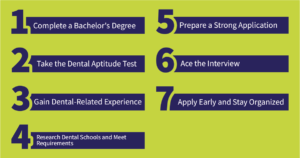
Getting into dental school in Canada is a competitive process, but with proper preparation and understanding of the requirements, you can improve your chances of being accepted. Below is a step-by-step guide on how to get into a Canadian dental school.
1. Complete a Bachelor’s Degree
While some dental schools accept applicants after completing two or three years of undergraduate study, most require a completed bachelor’s degree. It’s important to take courses in subjects like biology, chemistry, physics, and anatomy, as these are typically prerequisites for dental school.
Recommended Majors
- Biology
- Health Sciences
- Biochemistry
- Physiology
Required Courses
Each dental school in Canada has its own specific prerequisite courses. Generally, you’ll need to complete:
- General Chemistry
- Organic Chemistry
- Biology
- Physics
- Human Anatomy and Physiology
- Biochemistry
- English/Composition
2. Take the Dental Aptitude Test (DAT)
Most Canadian dental schools require applicants to take the Dental Aptitude Test (DAT), which is administered by the Canadian Dental Association (CDA). The test assesses your academic and manual dexterity skills.
Key Sections of the DAT:
- Perceptual Ability: Measures your ability to visualize objects in three dimensions.
- Reading Comprehension: Tests your ability to understand and analyze written material.
- Natural Sciences: Includes questions on biology and chemistry.
- Manual Dexterity (Carving): Some dental schools may require you to complete a manual dexterity test where you carve a shape out of soap to assess your fine motor skills.
How to Prepare for the DAT:
- Study Guides: Invest in DAT prep books or online resources that provide practice questions and review material.
- Mock Exams: Take practice exams under timed conditions to familiarize yourself with the test format.
- Manual Dexterity Practice: If required by your target dental schools, practice carving or similar activities that improve hand-eye coordination.
3. Gain Dental-Related Experience
Dental schools in Canada highly value applicants who have hands-on experience in the dental field. Shadowing a dentist or working in a dental clinic can strengthen your application.
Ways to Gain Experience:
- Shadow a Dentist: Observing a dentist in practice will give you valuable insight into the profession and show admissions committees your dedication.
- Volunteer in a Dental Clinic: Volunteering at a dental clinic can provide exposure to patient care and dental procedures.
- Work as a Dental Assistant: If you have the opportunity, working as a dental assistant gives you firsthand experience of dental procedures and patient interactions.
4. Research Dental Schools and Meet Requirements
Canada has several prestigious dental schools, each with its own specific admission requirements. Research the programs thoroughly to ensure you meet all prerequisites and understand their expectations.
List of Canadian Dental Schools:
- University of Toronto – Faculty of Dentistry
- University of British Columbia – Faculty of Dentistry
- McGill University – Faculty of Dentistry
- Dalhousie University – Faculty of Dentistry
- Western University – Schulich School of Medicine & Dentistry
- Université de Montréal – Faculté de Médecine Dentaire
5. Prepare a Strong Application
In addition to academic performance, dental schools look at various aspects of your application, including personal qualities and extracurricular involvement.
Key Components of Your Application:
- Transcripts: Ensure you have a strong GPA, especially in the sciences.
- DAT Scores: Aim for competitive scores in all sections, particularly in natural sciences and perceptual ability.
- Personal Statement: Write a compelling essay that outlines your passion for dentistry, personal experiences, and why you’re a strong candidate for dental school.
- Reference Letters: Obtain strong letters of recommendation from professors, employers, or dentists who can speak to your academic performance, character, and suitability for dental school.
6. Ace the Interview
If selected, you’ll be invited for an interview, which is the final step in the dental school application process. Dental schools often use the Multiple Mini Interview (MMI) format, where you’ll rotate through a series of short, timed stations and answer questions or complete tasks.
Interview Tips:
- Prepare for Ethical Scenarios: Be ready to discuss how you would handle ethical dilemmas in a dental setting.
- Practice Communication Skills: Clear, concise, and empathetic communication is essential. Practice answering questions in a calm and confident manner.
- Know Your Application: Be prepared to discuss your personal statement, work experience, and academic background.
7. Apply Early and Stay Organized
Most dental schools in Canada use the Canadian Dental Association Application Service (OMSAS) for their applications. Pay attention to deadlines, submit all required materials on time, and stay organized throughout the application process.
Important Deadlines:
- Applications Due: Deadlines typically fall between November and February, but check with each school for specific dates.
- DAT Test Dates: The Canadian DAT is offered twice a year, in February and November.
Tips for a Successful Dental School Application
- Maintain a High GPA: Aim for a GPA of 3.6 or higher to stay competitive.
- Prepare for the DAT Well in Advance: Give yourself at least 3-6 months to study for the test.
- Engage in Extracurricular Activities: Leadership roles, community service, and involvement in dental-related organizations can enhance your application.
- Stay Persistent: If you don’t get accepted the first time, don’t give up. Many successful applicants reapply after improving their qualifications.
FAQs About Getting Into Dental School in Canada
1. What GPA is required to get into dental school in Canada?
2. How many years does it take to become a dentist in Canada?
It typically takes 4 years of dental school after completing a 4-year bachelor’s degree, making it an 8-year educational commitment.
3. Is the DAT required for all Canadian dental schools?
Yes, most dental schools in Canada require the Canadian DAT as part of the application process.
4. How much does dental school cost in Canada?
5. What should I include in my personal statement for dental school?
Your personal statement should highlight your passion for dentistry, relevant experiences, and the personal qualities that make you a strong candidate.
6. Can I apply to dental school without a science degree?
Yes, as long as you have completed the required prerequisite courses in science, you can apply with a non-science degree.
7. Is dental school in Canada competitive?
Yes, dental school in Canada is highly competitive, with many applicants vying for a limited number of spots at each school.
8. Do Canadian dental schools offer financial aid?
Conclusion
Getting into dental school in Canada is a competitive and challenging process, but with careful planning, dedication, and preparation, you can achieve your goal of becoming a dentist. By meeting the academic requirements, gaining relevant experience, excelling on the DAT, and submitting a strong application, you’ll be well on your way to a rewarding career in dentistry.